
Property Development
Families cannot move into homes that do not exist, so we renovate and build them.
Why we develop
Every other program eventually runs into the same wall: supply.
Deposit assistance does nothing in a market with no vacancies. Landlord advocacy only works if there is a landlord with a unit. Our case managers can do everything right and still end the month with a family in a hotel, because in a lot of the places we operate there is simply no affordable unit to move them into.
Property development is our answer to that. We find, acquire, rehabilitate, and develop residential and commercial properties to create housing options for U.S. veterans and first responders — adding to the housing stock rather than competing for it.
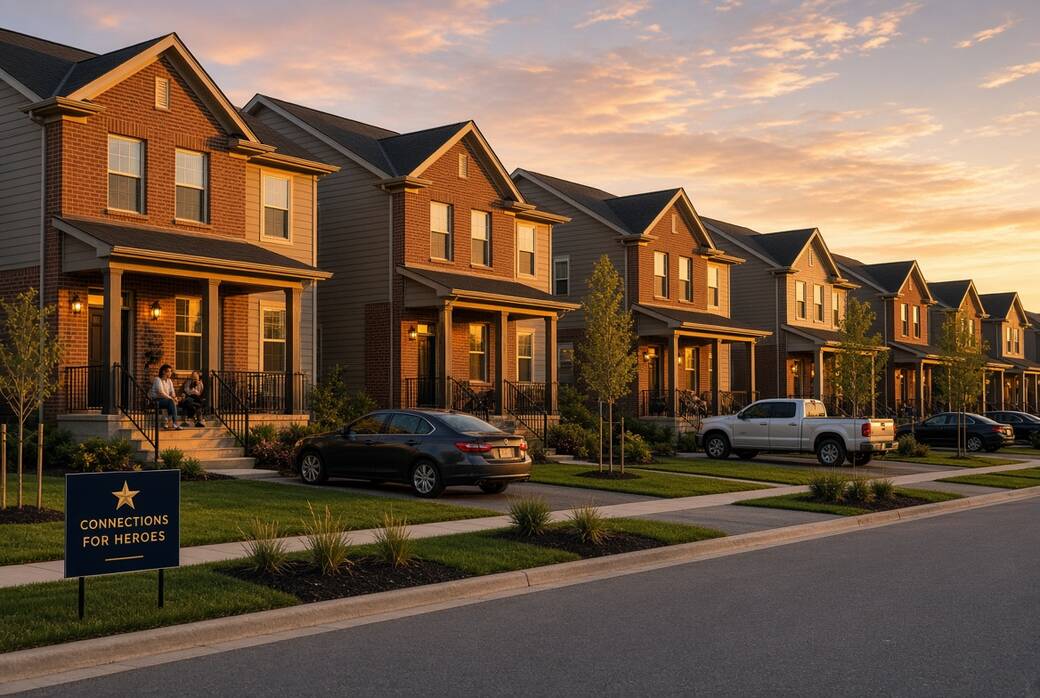
AI-generated image. It will be replaced with a real photo as they become available.
What we build
Two tracks, one purpose.
How a project runs
Find, acquire, rehabilitate, develop.
Accessibility is designed in, not retrofitted
Adapting an existing home costs several times what building the same feature in during construction does. Every unit we develop is designed against the standard described on our ADA & Smart Home Renovations page — zero-step entry, clear turning radii, blocked-in bathroom walls, and accessible routes — whether or not the first resident needs them.
Development is how the waiting list gets shorter.
This is the program where corporate partners, developers, and major donors move the needle most.